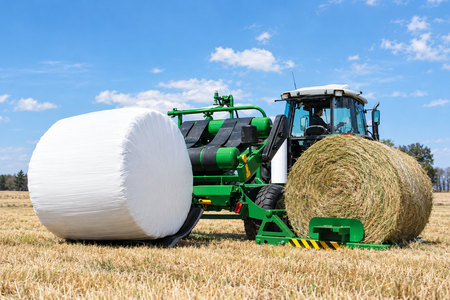

Net Wrap vs. Twine for Round Bales: Which Should You Use?
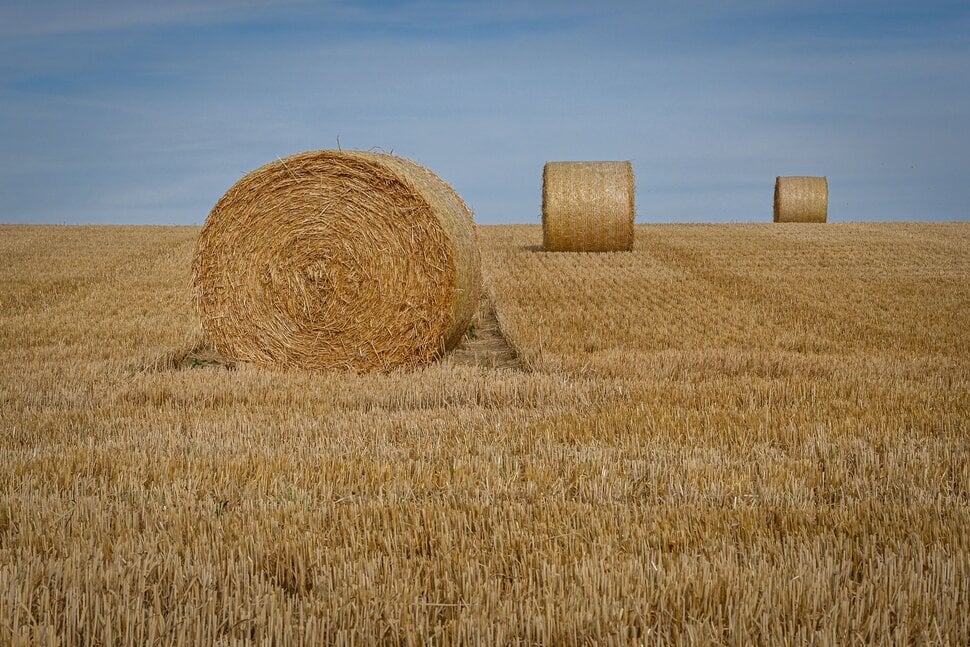
Net wrap and twine both hold a round bale together, but they don't perform the same job in the field or in storage. Net wrap wraps faster and sheds weather better. Twine costs less upfront and works fine for smaller operations that handle bales less. The right choice depends on how many bales you're making, how you're storing them, and what your baler is set up for.
Here's how the two compare on the factors that actually affect your hay quality and your bottom line.
Speed at the Baler
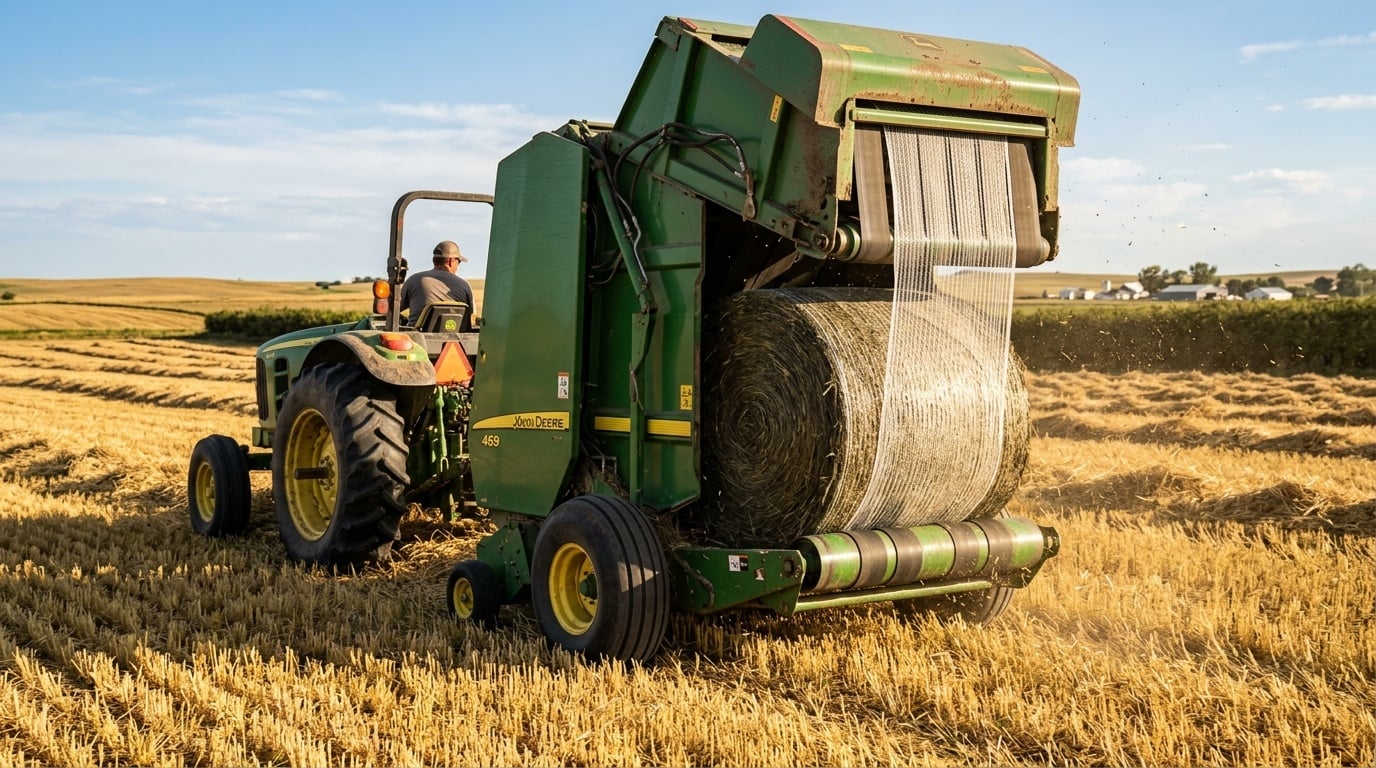
Net wrap only needs two to four rotations to finish a bale. Twine needs roughly 20 revolutions to create a bale with the same durability. That difference adds up fast during a tight baling window. Research from the American Society of Agricultural and Biological Engineers found that a round baler running net wrap produced 32% more bales per hour than the same baler running twine. For Alberta producers racing weather between cuttings, that's extra acres covered before the next system rolls in.
Cost Per Roll vs. Cost Per Bale
Twine is the cheaper material. A roll of twine typically costs about 90% less than a roll of net wrap. But the math changes once you look at cost per bale rather than cost per roll, since twine needs far more material to wrap the same bale. Once you factor in fuel, labor, and the extra time at the baler, many producers find net wrap and twine land closer together on a per-bale basis than the sticker price on the roll suggests. If your baler can run either material, it's worth running your own numbers based on your bale size and current pricing before deciding.
Bale Durability and Storage
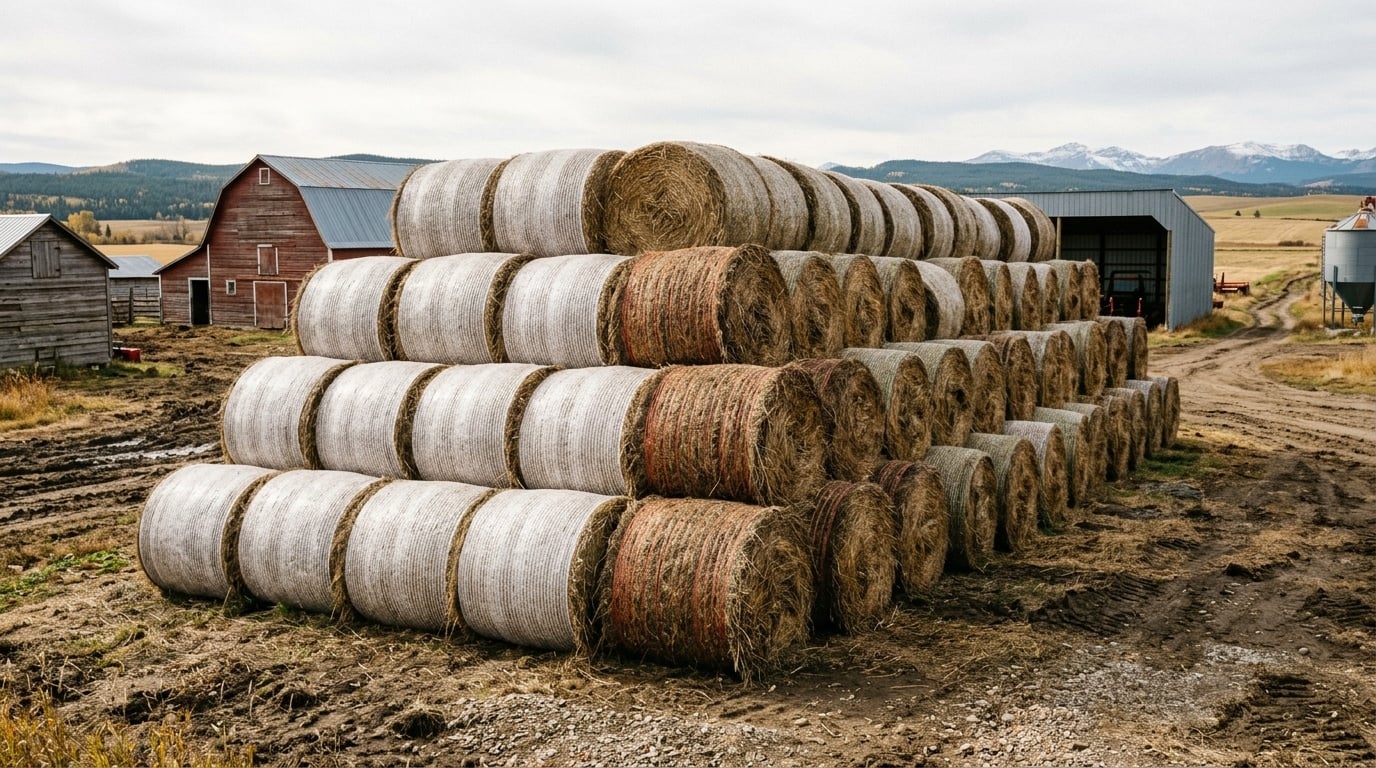
This is where net wrap tends to pull ahead for anyone storing bales outdoors. A tight, full-width net casing holds a bale's shape and sheds rain and snow more effectively than string spaced around the circumference. Twine-wrapped bales leave gaps where moisture can work its way in, which matters if your bales are sitting on a stack or in a yard through an Alberta winter rather than under cover.
Net wrap's tighter finish also reduces losses in handling and transport. Bales hold together better on a bale grab or through a feeder, with less shredding or loose hay left behind. If your bales are stored sheltered and handled minimally before feeding, twine's durability gap matters less.
If sustainability or plastic waste is a factor in your decision, it's worth weighing biodegradable net wrap against standard net wrap before you buy your next roll.
High-Moisture Baleage
Both materials get used for baleage, but the type of twine matters more here than with dry hay. Rodenticide-treated sisal twine can degrade the plastic wrap layered over a bale, and a hole in that plastic invites mold or yeast growth inside. Net wrap creates a smoother surface under the plastic wrap and carries less risk of puncturing it during handling. If you're wrapping high-moisture bales for silage, that smoother base is one more reason producers lean toward net wrap for this specific use.
A Safety Consideration Most Comparisons Skip
Before you decide, there's a livestock health angle worth knowing if your hay goes to cattle, especially unrolled or ground in a mixer. Research reviewed by University of Nebraska–Lincoln Extension found that rumen microbes don't break down plastic net wrap, and even biodegradable twine digests far slower than the hay itself. Cattle usually leave the net wrap or twine behind and eat around it, but ingested wrap has caused fatal digestive impaction in isolated cases. Removing all net wrap and twine before feeding, particularly with unrolled bales or a bale processor, is the safest practice regardless of which material you choose.
Which Should You Choose?
There's no universal answer here, but the decision usually comes down to three questions:
How many bales are you making per season? High volume favors net wrap for the time savings alone. Smaller operations feeding their own herd may not need the extra speed.
Where are your bales stored? Outdoor, uncovered storage favors net wrap's weather resistance. Bales going under a roof or onto a pallet fare fine with either.
What's your baler set up for? Some balers run only one material or the other. If yours handles both, that removes one constraint from the decision. And whichever material you settle on, getting the roll dimensions right matters just as much as the material itself. See our guide to choosing the right net wrap width and length for your baler to avoid ordering the wrong size.
For Alberta producers shipping or hauling bales any distance, net wrap's durability advantage in transport is worth the higher material cost. For smaller-scale or personal-use haying, twine remains a solid, budget-friendly option.
FAQ
What is the cost difference between net wrap and twine?
Twine costs roughly 90% less per roll, but requires about 20 revolutions per bale compared to net wrap's two to four. Once labor, fuel, and per-bale material use are factored in, the real cost gap is smaller than the roll price implies.
Will cattle eat net wrap?
Cattle typically leave net wrap and twine behind when eating hay, but ingestion has caused serious digestive problems in some documented cases. Removing wrap before feeding, especially with unrolled or processed bales, is the safest approach.
How many bales does one roll of net wrap make?
Most net wrap rolls cover 110 to 170 round bales, depending on roll length, bale width, and how many wraps are used per bale.
Can I switch between net wrap and twine on the same baler?
Many round balers are built to run either material, but not all. Check your baler's specifications, or ask your dealer, before assuming yours is compatible with both.
Whichever you choose, West Country Dairy Supply carries net wrap for hay bales in multiple widths and lengths, along with baler twine for producers who prefer it, with fast shipping across Alberta and the rest of Canada.
Recent articles
View all
What Is Silage Wrap Made Of? A Guide to Film Types & Thickness