Biodegradable Net Wrap: Is It Worth the Switch?
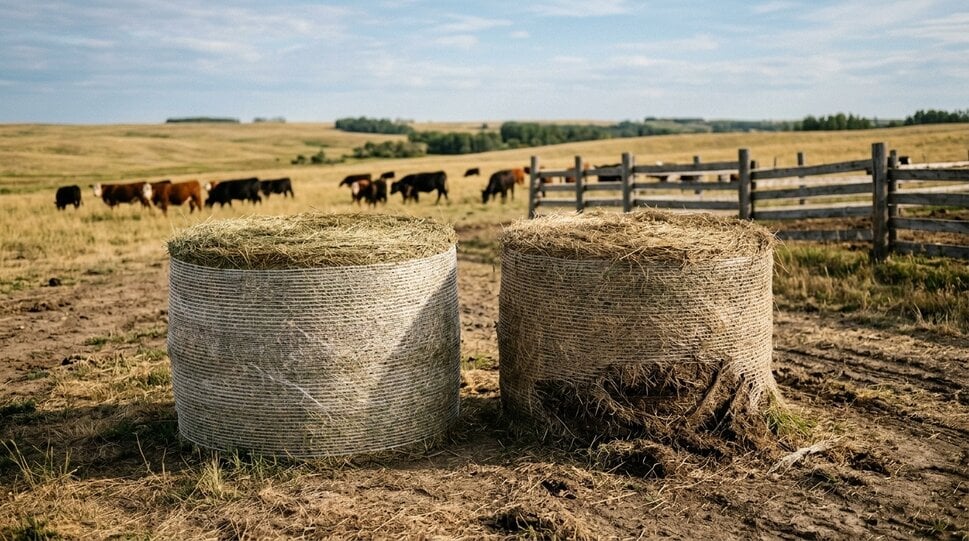
Biodegradable net wrap is a new option in Alberta hay yards, and it's worth understanding before you decide whether to switch from standard plastic net wrap. The short version: it solves a real problem with plastic waste and cattle safety, but it costs more, and the research on whether it's fully safe for cattle to ingest is still underway.
Here's what's actually known so far.
What Biodegradable Net Wrap Is
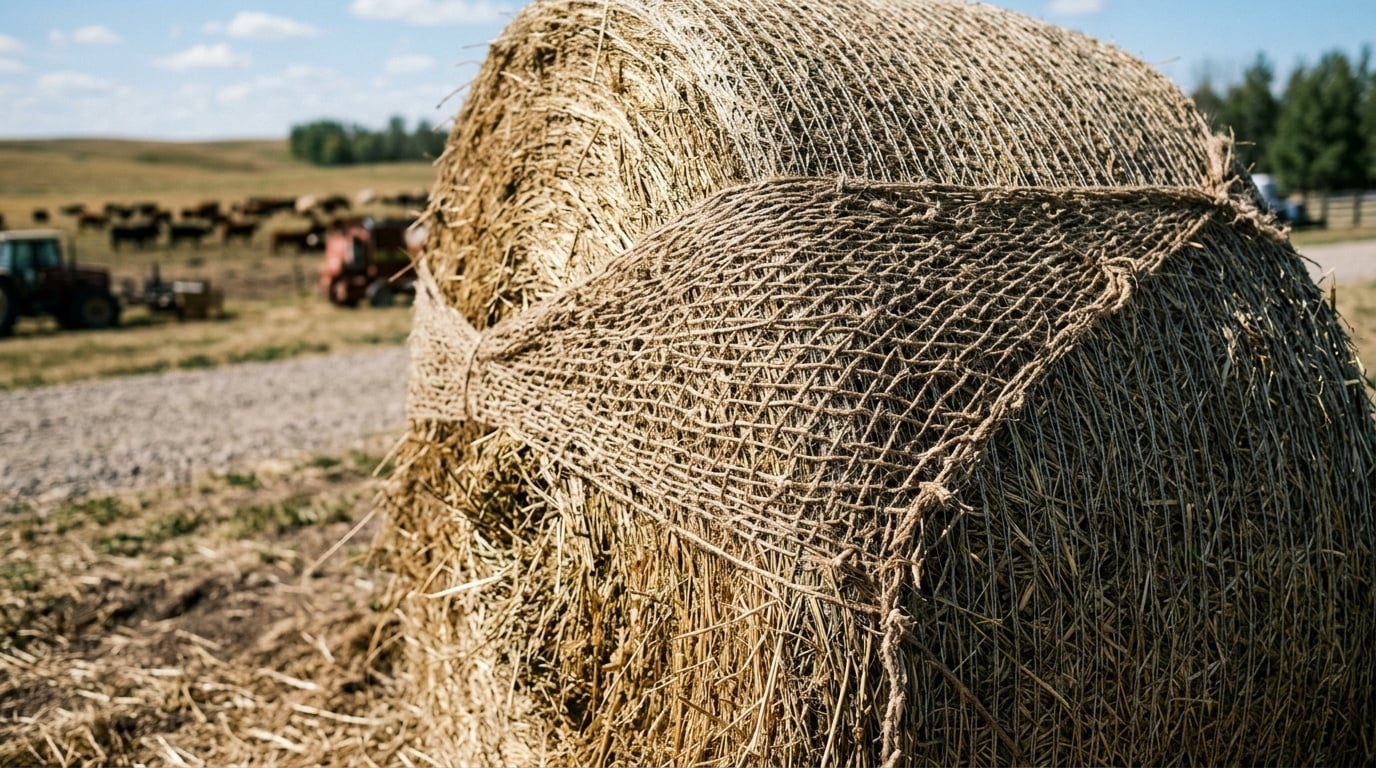
Unlike standard polyethylene net wrap, biodegradable versions are made from plant-based, renewable materials designed to break down naturally in soil rather than persist for years. The best-known example was developed on a ranch near Vermilion, Alberta, after the founders got tired of cutting plastic net wrap and twine off thousands of bales a year. It's now sold through Case and New Holland dealers across North America, and it comes in the same standard widths as plastic net wrap, so it fits existing balers without modification.
What It Costs
Biodegradable net wrap currently runs about $1 more per bale than standard plastic net wrap. That's a meaningful premium at scale. For an operation running a few thousand bales a season, the difference adds up fast, so the cost side of this decision isn't close.
How It Performs
Field testing across different climates, including sites from southern Florida to northern Alberta, has focused on matching plastic net wrap's strength and roll longevity. Manufacturer testing indicates the material holds its structural integrity for at least 12 months in typical storage conditions, similar to a standard plastic roll, though how long it lasts depends heavily on your specific storage conditions, sun exposure, and moisture. Unlike plastic, it's designed to fully break down in soil over time rather than sit in a bale yard or landfill indefinitely.
The Safety Question, Answered Honestly
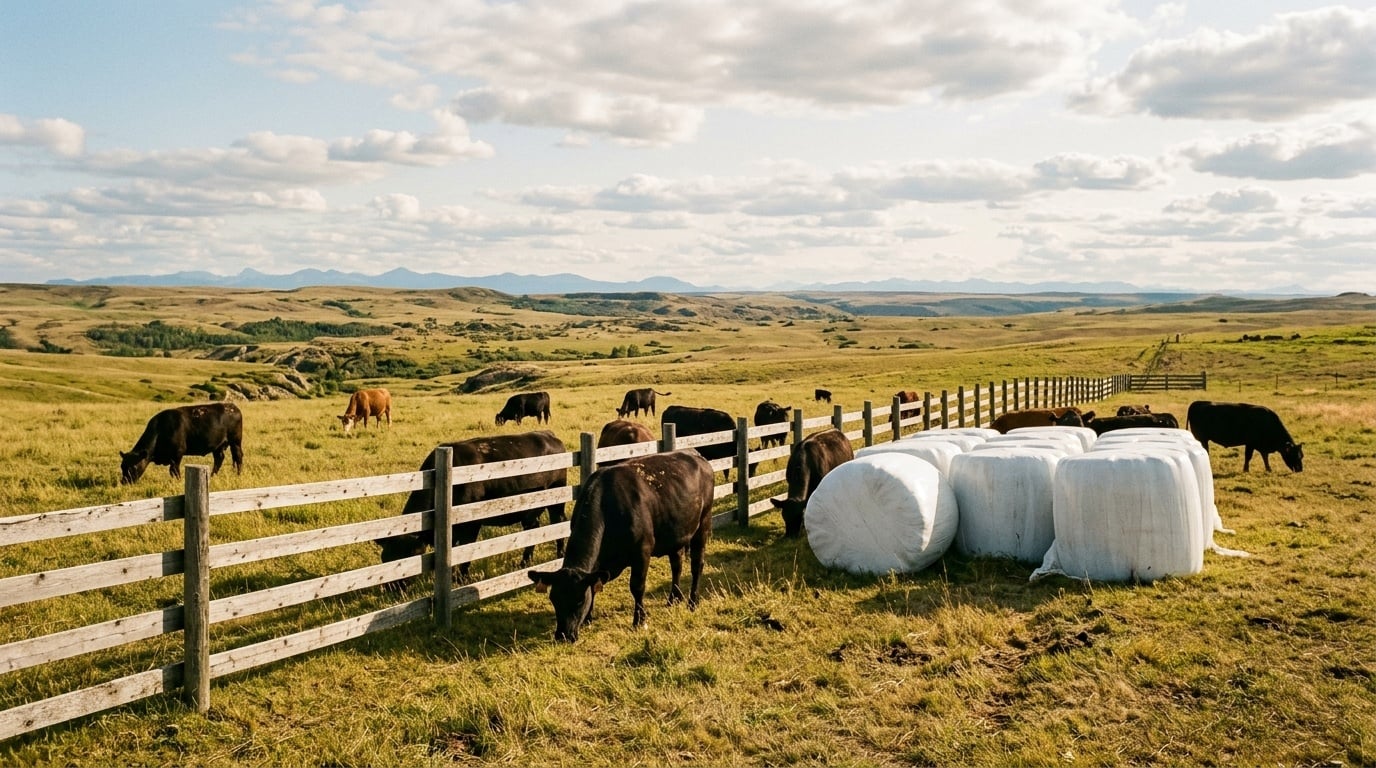
This is the part worth slowing down on. Plastic net wrap and twine are a known animal health risk. If cattle ingest enough of it, it can cause rumen compaction that's sometimes fatal without expensive surgery, and that risk doesn't disappear just because feed goes through a bale processor if the wrap isn't removed first.
Biodegradable net wrap is being positioned as a solution to that risk, but the safety case isn't fully closed yet. Alberta Beef Producers is currently funding research through Lakeland College to evaluate how a biodegradable net wrap breaks down in simulated and actual rumen conditions and whether it causes any performance issues when left on bales run through a processor. That project is active, not concluded, so the honest answer right now is that biodegradable wrap looks promising on paper, but the science confirming it's genuinely safer for cattle to accidentally ingest is still being tested.
Is It Worth the Switch?
For most operations, the answer depends on what you're optimizing for.
If plastic waste and disposal headaches are your main frustration, biodegradable net wrap solves a real problem. No more cutting tangled plastic off manure spreaders, no more net wrap piling up with nowhere useful to go.
If cost per bale is the deciding factor, the roughly $1-per-bale premium is hard to ignore at any real volume, and standard net wrap remains the more economical choice.
If cattle safety is the deciding factor, it's reasonable to wait for the Alberta Beef Producers research to conclude before treating biodegradable wrap as a proven safer alternative. Until then, the safest practice with any net wrap, biodegradable or not, is removing it before feeding, especially with unrolled or processed bales.
For now, most Alberta operations are still running standard net wrap, and that remains the practical choice for the majority of producers balancing cost, availability, and proven performance.
FAQ
Is biodegradable net wrap actually compostable?
The plant-based versions on the market are designed to break down in soil, including in a manure pack, rather than persist like plastic. On-farm composting is one disposal method manufacturers point to.
Does biodegradable net wrap fit standard balers?
Yes. Current biodegradable net wrap is manufactured in the same standard widths as plastic net wrap, so it works with existing equipment without modification.
Is it safer for cattle to accidentally eat?
That's still being studied. Ongoing research is evaluating how it breaks down in the rumen and whether it causes any issues when left on processed bales. It's not yet confirmed as fully safe to ingest, so removing any net wrap before feeding remains the recommended practice.
How much more does it cost than plastic net wrap?
Current pricing runs about $1 more per bale compared to standard plastic net wrap.
If you're sticking with proven, cost-effective net wrap for this season, browse our net wrap for hay bales in the widths your baler needs. For help deciding between net wrap and twine altogether, see our guide on net wrap vs. twine for round bales. And once you've picked a material, get the roll dimensions right with our guide to choosing the right net wrap width and length for your baler. Have questions about what's available or coming to our shelves, get in touch with our team.
Recent articles
View all
What Is Silage Wrap Made Of? A Guide to Film Types & Thickness