
What Is Silage Wrap Made Of? A Guide to Film Types & Thickness
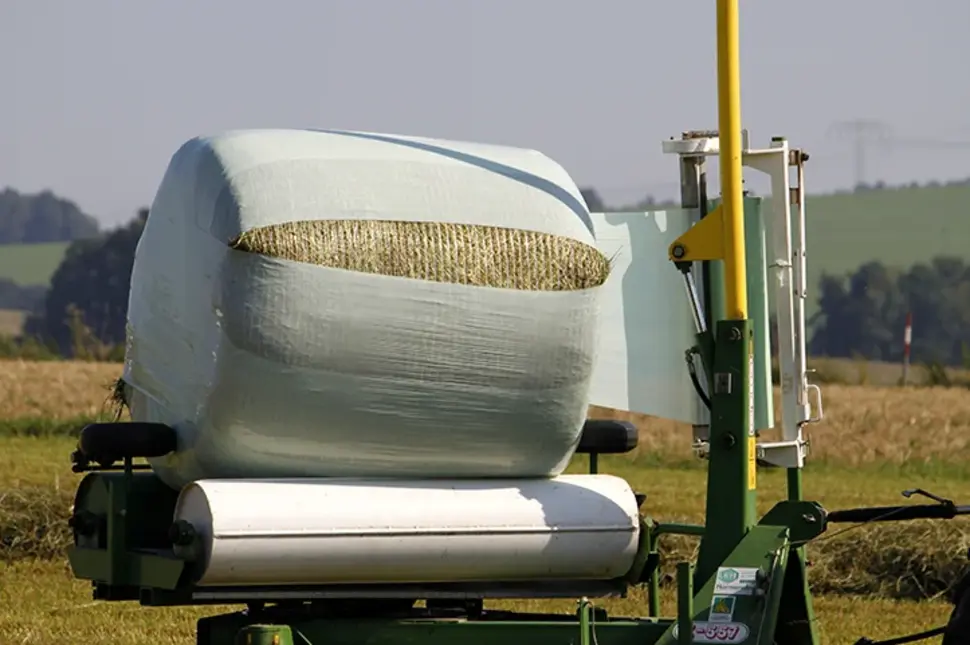
Silage wrap looks like heavy-duty cling film, but it's a purpose-built technical product. The whole point of it is to seal a bale away from oxygen so the forage ferments and keeps, and that job depends on what the film is made of and how it's built. Here's what's actually in the roll, and what the numbers on the box mean for your bales.
The base material: polyethylene, engineered
Silage wrap is made primarily from linear low-density polyethylene (LLDPE), often blended with other polymers to boost puncture resistance, cling, and UV stability. That base is what lets the film stretch and cling to itself, forming a tight, self-sealing skin around the bale without any adhesive or tape. It's the same family of plastic used in a lot of stretch films, but silage wrap is formulated for a harder life: months outdoors, big temperature swings, and constant tension holding a heavy bale's shape.
Silage wrap isn't the only "silage plastic"
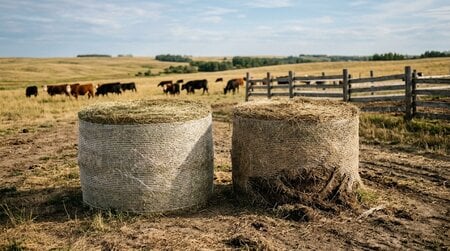
It's easy to lump all the plastic on a forage operation together, but a few different products do different jobs, and mixing them up leads to buying the wrong thing. Net wrap goes on at the baler to hold the bale's shape — it's not airtight and doesn't seal anything. Silage stretch wrap (the film this guide is about) is the airtight layer you spiral around a baleage bale to exclude oxygen. Bunker covers and silage tarps are the heavy sheets that seal a packed pile or pit. If you're making individually wrapped baleage, stretch wrap is the product you're after; if you're covering a bunker, that's a different page entirely. Still deciding between the two? See baled silage vs. bunker silage.
:max_bytes(150000):strip_icc()/img_55803bf567c26_49222-942a39c36c6e42108d5e325d884bbefd.jpeg)
Why the film has multiple layers
Quality silage film isn't a single sheet of plastic — it's co-extruded from several layers bonded together, commonly three to seven. Each layer does a job: an inner layer that's less tacky so the roll unwinds cleanly, a strong core that provides the oxygen barrier, and an outer cling layer that grips the bale and the previous wrap. That oxygen barrier is the part that matters most: a tight, air-excluding seal is what creates the anaerobic environment good fermentation needs. More layers generally mean more consistent strength and a better barrier, which is why cheaper single- or twin-layer films tend to disappoint.
Thickness: what "micron" means
Film thickness is measured in microns (µ) — or sometimes in "mil," where 1 mil ≈ 25 microns. The industry standard is 25µ. Newer high-performance films run thinner, around 19–23µ, but don't let the thinness fool you: they're engineered to match the puncture resistance and oxygen barrier of standard film while coming on longer rolls, which means fewer roll changes during a busy wrapping day. Heavier 30µ films are also available where extra toughness is wanted.
Thickness on the roll isn't the whole story, though — what counts is the total film on the bale. A common target is roughly six layers of film covering the bale. That works out to about six wraps with 25µ film, or four wraps with 30µ. Under-wrap and you leave thin spots where air gets in and mould starts; the plastic you "save" costs you far more in spoiled feed.
Width and colour
Most modern round balers run 750 mm film as the standard width, with 500 mm rolls for smaller bales — so matching film width to your machine matters. Colour matters too: white or light-green films reflect heat and keep the bale cooler in the sun, while UV stabilisers built into the film stop it breaking down over months of outdoor storage. A cheap, non-UV film that chalks and cracks by spring isn't a bargain — it's a bale you'll find spoiled when you go to feed it.
Cling and stretch
The film's cling is what holds each wrap to the last one so the envelope stays sealed. Getting there depends on your wrapper being set correctly: pre-stretch is typically around 70%. Too little stretch wastes film and leaves the wrap loose, so the bale relaxes and pulls in air. Too much stretch causes the film to "neck down" — it narrows, reduces your overlap, and creates thin spots where oxygen can sneak in. Dialling the wrapper in is as important as the film you buy.

How to spot a quality film
You can't judge a film by price alone, but a few things separate a good one from a cheap one: a genuine multi-layer construction, a strong UV package rated for a full season outdoors, consistent gauge so there are no weak spots, and good, reliable cling. A quality film unwinds cleanly, holds tension without necking down excessively, and still looks intact months later. A bargain film that tears at the baler, chalks in the sun, or won't hold cling ends up costing you in wasted film, re-wrapping, and spoiled bales.
How to choose the right film
Put it together and a good silage wrap decision comes down to a few checks: a multi-layer, UV-stabilised film; a light colour; a micron rating suited to how long the bales will sit; and a width that matches your baler. Get those right, wrap to full coverage, and set your pre-stretch correctly — that's what separates a bale that opens up green and sweet from one that's mouldy on the shoulders.
FAQ
What is silage wrap made of?
Primarily linear low-density polyethylene (LLDPE), usually blended with other polymers and built as a multi-layer co-extruded film with UV stabilisers and a cling additive.
How thick should silage wrap be?
Standard film is 25 microns; high-performance films run 19–23µ with equivalent strength, and heavier options reach 30µ. Aim for about six layers of film on the finished bale regardless of the micron you choose.
What's the difference between silage wrap and net wrap?
Net wrap holds the bale's shape at the baler but isn't airtight. Silage stretch wrap is the sealed, oxygen-excluding film you spiral around a baleage bale so it ferments and keeps.
Does the colour of silage wrap matter?
Yes — white and light-green films reflect heat and keep bales cooler, and UV stabilisers protect the film through months of outdoor storage.
Why does my wrap tear or let air in?
Usually too few layers, an incorrect pre-stretch setting (over-stretching causes thin "neck-down" spots), or a non-UV film breaking down outdoors.
West Country Dairy Supply stocks silage bale wrapping film built for a tight, airtight seal and outdoor durability, with fast shipping across Alberta and Canada. If you're weighing widths or thicknesses for your baler, the silage bale wrap collection is the place to start, and when the season's done, here's how to recycle your used wrap.
Recent articles
View all
Silage Wrap Recycling in Alberta: What Farmers Need to Know