Silage Wrap Recycling in Alberta: What Farmers Need to Know
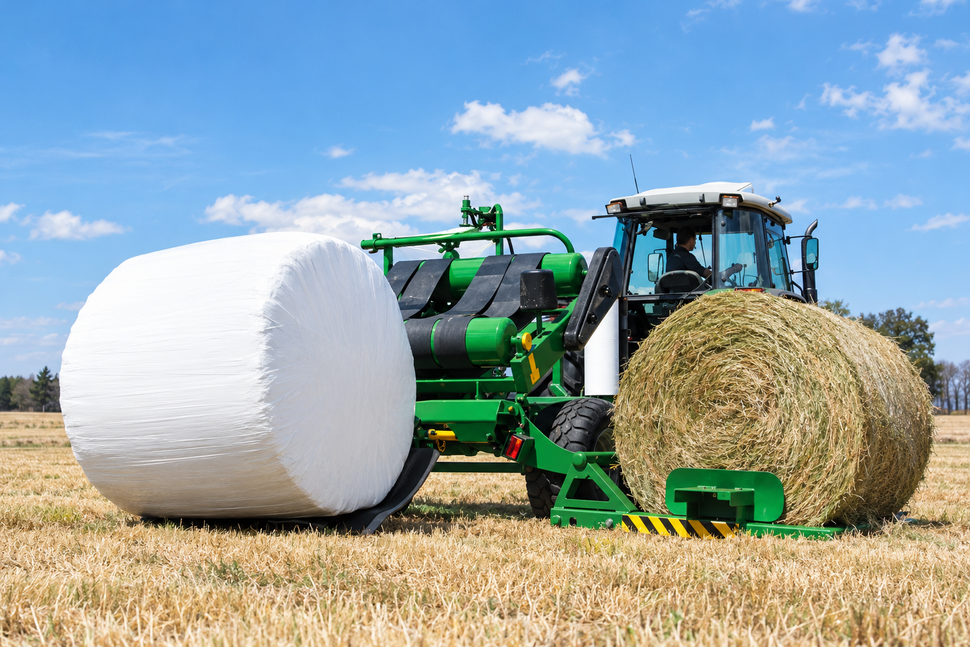
Every roll of silage wrap that keeps a bale airtight through winter eventually becomes a pile of used plastic in the yard. For years, Alberta producers had few good options for that plastic beyond the landfill or the burn barrel. That's changing. Here's what's new, and how to handle your used wrap so it can actually be recycled.
What's changing in 2026
Alberta's long-running farm plastics program — "Alberta Ag-Plastic. Recycle It!" — is expanding. Launched in 2019 to collect grain bags and baler twine, the pilot is adding compacted silage plastic and bale wrap in select municipalities starting in fall 2026. The program is operated by Cleanfarms in partnership with the Agricultural Plastics Recycling Group (APRG), funded by the Government of Alberta and administered by Alberta Beef Producers.
It isn't a brand-new, untested idea. The grain-bag and twine side of the program has been running for years, and by late 2025 Alberta farmers had returned more than 4.9 million kg of used agricultural plastic through a network of collection partners across the province. Adding bale wrap is a natural next step, and the scale of the need is real: the province estimates cow-calf operations, cattle feeders, and dairy farms use up to 3,350 tonnes of bale wrap and silage plastic every year in Alberta.

Why not just burn it or bury it?
Burning ag plastic in a barrel or pit is the old default, but it's increasingly discouraged — it releases smoke and residues you don't want drifting over your yard, animals, or feed, and open burning of this kind of waste is restricted in many areas. Burying or landfilling it means paying to haul bulky, low-density plastic that just sits there. Recycling turns that same plastic into something useful and keeps it out of the ditch and the landfill. For a lot of producers, the recycling route ends up being less hassle than the burn barrel once a collection site is within reach.
How to prep your wrap so it can be recycled
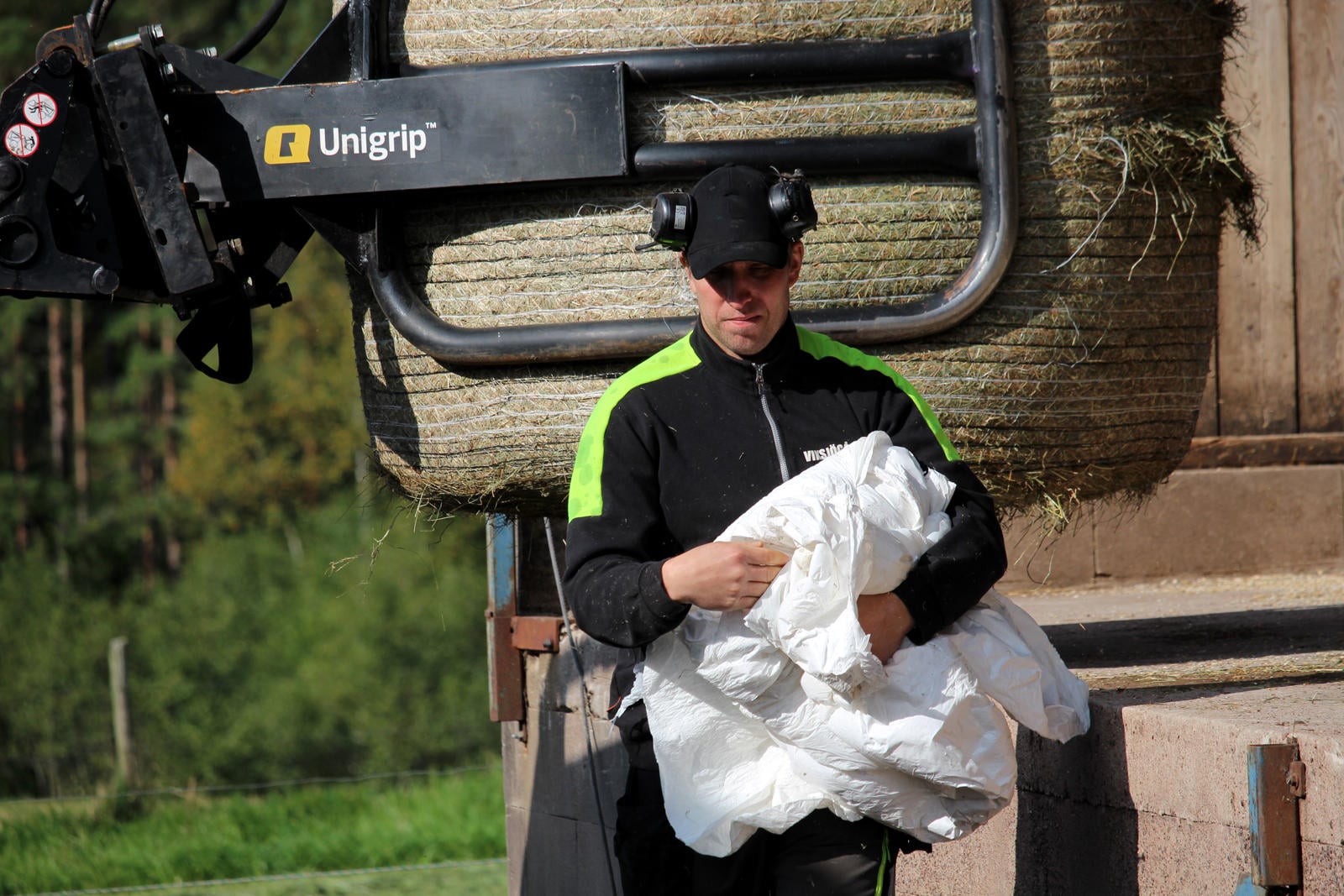
Recyclers can only use this plastic if it comes in clean and sorted. A few habits make the difference:
- Keep each plastic type separate. Grain bags, twine, silage plastic, and bale wrap have to be collected on their own — mixing or co-mingling them makes the whole batch unrecyclable.
- Shake off the debris. Remove as much dirt, spoilage, snow, and ice as you can before storing or dropping off. Heavily contaminated plastic gets rejected.
- Densify and bundle. Compact the wrap into tight bundles tied with twine, or fold it down, so it transports efficiently and stays contained instead of blowing around.
- Return it to a collection site. Free collection bags are available at drop-off sites, and the program is adding locations as it rolls out.
Because the bale wrap and silage plastic stream is rolling out municipality by municipality, the fastest way to confirm what's available near you is to email the program directly at [email protected].
What happens to the plastic after you drop it off
The material collected through the program is recycled in North America into new products — and some of it comes back around to agriculture. That's the point of a circular system: the wrap that sealed your bales this year becomes feedstock for new plastic goods rather than waste. It also gives you a straightforward answer when a customer, neighbour, or auditor asks what your operation does with its used plastic.
What you can do right now
Even if collection hasn't reached your municipality yet, you can get ahead of it. Store used wrap clean, dry, and out of the weather; keep it separated from twine and grain bags; and bundle it as you pull it off bales rather than letting it pile up loose. Wrap that's stored recycling-ready is wrap you won't have to sort or clean later — and it means that the day a site opens near you, you're ready to haul it in rather than scrambling to dig it out of a snowbank.
FAQ
Can I recycle silage wrap in Alberta yet?
Collection for bale wrap and silage plastic is expanding into select Alberta municipalities starting in fall 2026 through the "Alberta Ag-Plastic. Recycle It!" program. Twine and grain bags have been collected since 2019.
What plastics does the program take?
Grain bags and baler twine now, with silage plastic and bale wrap being added. Each type has to be kept separate — they can't be mixed in the same bag or bundle.
Does the wrap need to be clean?
Yes. Shake off dirt, spoilage, snow, and ice, and keep bale wrap separate from other plastics — co-mingled or heavily contaminated material can't be recycled.
Where do I drop it off?
At participating collection sites. Because the program is expanding in stages, contact Cleanfarms at [email protected] to confirm the nearest site for bale wrap.
Is there a cost?
The pilot is funded provincially, and collection bags are provided free at sites. Confirm current details with the program for your area.
Managing used wrap responsibly starts with using the right wrap in the first place — a film that seals tight and stays intact leaves you with clean, recyclable plastic at the end of the season instead of shredded scraps. West Country Dairy Supply carries silage bale wrapping films built for a tight, airtight seal, with shipping across Alberta and the rest of Canada.
Recent articles
View all
What Is Silage Wrap Made Of? A Guide to Film Types & Thickness