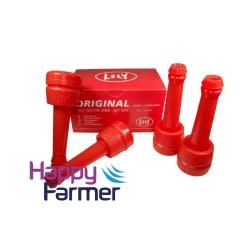
Liner Lely Original (559), red, silicone 21mm

Article code: 5.9700.2008.0.222123
SKU: 205083
C$193.00
Add to cart
Order by 5pm and get it shipped tomorrow.
Only a few left
  • Details
  • Lely Original Silicone Liner (559), Red – 21mm

    The Lely Original 559 Red Silicone Liner is the industry standard for Lely Astronaut robotic milking systems. As the most widely utilized silicone liner in the Lely range, it is specifically designed to balance high-speed milking efficiency with maximum cow comfort.

    Compatibility

    • Milking Robots: Fully compatible with the following Lely models: Lely A2/A3/A4/A5
    • Shell Type: Designed to fit perfectly into Lely Shell Type A.

    Key Features

    • Industry Standard: This is the most commonly used silicone liner for Lely robots, trusted for its consistent performance across diverse herd types.
    • Premium Silicone Construction: Unlike rubber, this high-grade silicone remains supple and maintains its shape for the duration of its service life, ensuring uniform pulsation.
    • Exceptional Longevity: Rated for an impressive 10,000 milkings, significantly reducing the frequency of maintenance shutdowns and lowering the long-term cost per milking.
    • 21mm Mouthpiece: The 21mm diameter is optimized for a wide range of teat sizes, providing a secure seal without causing congestion at the teat base.
    • Hygiene & Safety: Silicone is non-porous and resistant to milk fats and cleaning chemicals, making it highly effective at preventing bacterial buildup.


    Technical Specifications

    Feature

    Details

    Lely Part Number

    5.9700.2008.0

    Model

    559 (Red)

    Material

    High-Grade Silicone

    Mouthpiece Size

    21 mm

    Service Life

    10,000 Milkings

    Packaging

    Sold per set of 4 pieces

    Performance Insight

    The "Red" 559 liner is favored for its "gentle-touch" characteristics. Because silicone does not harden over time like rubber, the pressure applied during the massage phase of pulsation remains constant. This leads to better teat end condition and can help reduce hyperkeratosis in high-producing cows.