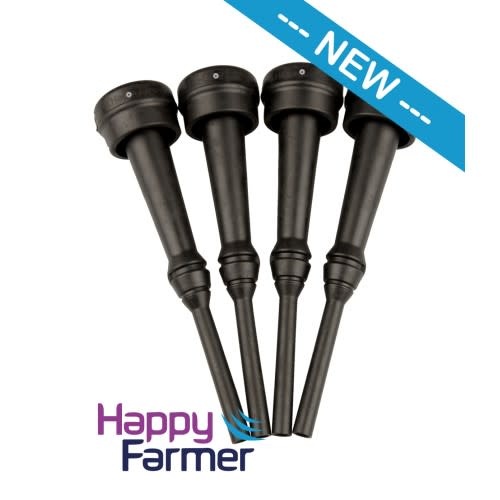
HappyLiner VENTED FL-0021 Rubber Liner (Set of 4)
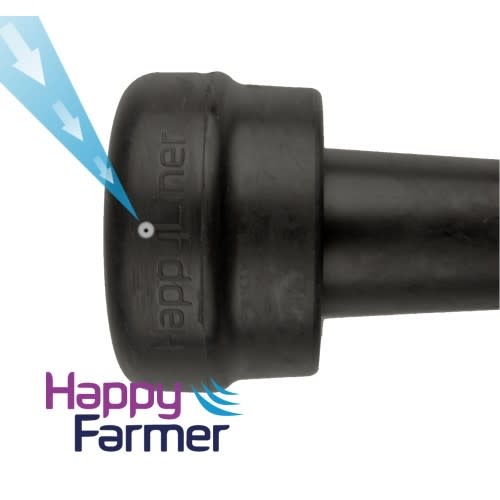
The HappyLiner VENTED FL-0021 represents an evolution in robotic milking technology. Specifically developed for the Lely Astronaut system, this liner incorporates an integrated air vent in the mouthpiece (hood). This venting technology balances the vacuum levels, ensuring a smoother milk flow and significantly improving cow comfort during the milking cycle.
Key Advantages of the Vented Design
- Increased Efficiency: Achieves a higher milking speed (up to 0.3 kg/min increase), reducing the time each cow spends in the robot.
- Superior Udder Health: The constant airflow prevents "backlash" or milk re-spray, which is a primary cause of cross-contamination and new mastitis infections.
- Reduced Stress: Provides a quieter milking experience with less teat tissue stress, leading to calmer cows and better milk let-down.
- Optimal Milk Quality: Facilitates a gradual discharge of milk, resulting in drier teats after detachment and lower milk acidity levels.
- Better Milk-Out: The improved vacuum stability ensures the quarter is milked out more completely and consistently.
Technical Specifications
|
Feature
|
Details
|
|
Model
|
HappyLiner FL-0021 VENT
|
|
Special Feature
|
Hood Vented / Integrated Air Vent
|
|
Head Design
|
Convex Head (Reduced Air Suction)
|
|
Material
|
High-Quality Food-Grade Rubber
|
|
Compatibility
|
Lely Long Type C Shells (Interchangeable with Original)
|
|
Lifespan
|
2,500 Milkings
|
|
Packaging
|
Sold as a set of 4 pieces
|
Why Choose Vented Liners?
Traditional non-vented liners can sometimes cause vacuum fluctuations at the teat end, leading to congestion or "crawling" (where the liner moves too high up the teat). The HappyLiner VENT addresses this by introducing a controlled amount of air at the head, which helps push the milk away from the teat and toward the receiver more efficiently.
Maintenance Tip
To maintain optimal milk quality and udder health, it is recommended to track your robot's milking count and replace the full set of four liners once the 2,500-milking threshold is reached. Worn rubber can develop micro-cracks that harbor bacteria and lose the "snap" required for efficient milk let-down.